Plan a route that works for pedestrians
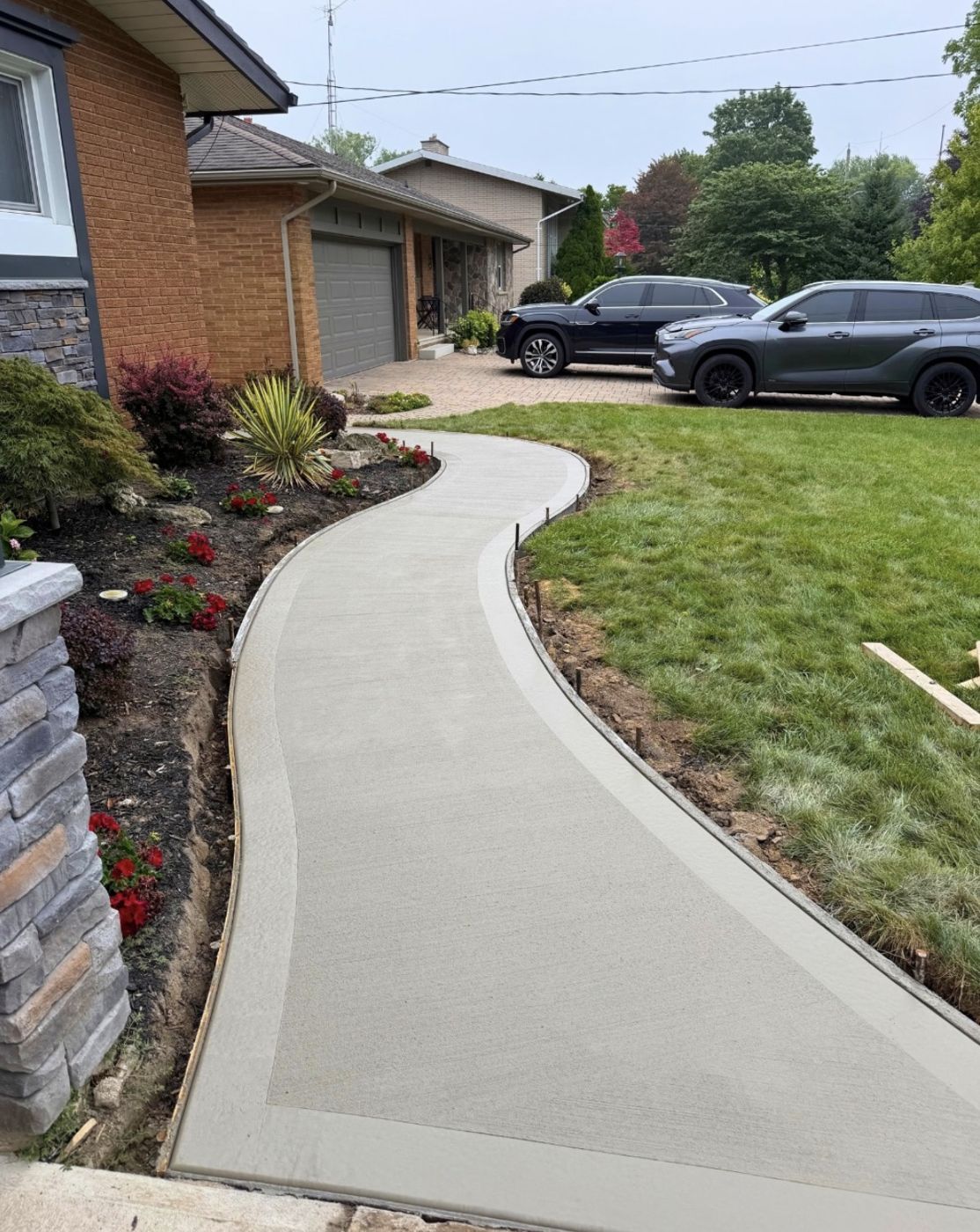
Begin with the destinations: entrances, parking spaces, gates, steps and outdoor gathering areas. The shortest line is not always the most useful route if it creates a steep grade or awkward turn. Doors need clearance, landings need room, and walkway edges should relate sensibly to landscaping. Where accessibility requirements apply, widths, running slopes, cross slopes and transitions should be checked against the governing standards.
Public sidewalks and work within a street right-of-way may require municipal review, permits or inspection. A private front walk can involve different requirements. We can talk through the proposed scope and identify questions to resolve before construction. Existing trees, buried utilities and drainage features also deserve early attention because they may limit excavation or affect the route.
Address movement, water and surface texture
Concrete walks rely on stable support beneath each section. Base preparation should account for the existing soil and any disturbed ground along the route. Joints help organize expected concrete movement, while separation from adjoining structures may be needed at selected locations. Simply placing a new panel beside a settled one can leave an uncomfortable transition unless elevations are considered together.
A textured finish can improve footing, but no outdoor surface is slip-proof. Slopes should direct water toward an appropriate outlet rather than create puddles at doors or channel runoff onto neighboring property. Curing and protection remain important even for a small sidewalk project. Discuss when the path can reopen, how landscaping will meet the edges and which winter maintenance practices are suitable for the concrete.
Benefits
- A direct, considered route can make entrances easier to find.
- Coordinated elevations reduce abrupt transitions between surfaces.
- Suitable texture can improve footing in everyday conditions.
- Planned drainage helps limit standing water along the walking route.
- Defined concrete edges separate pedestrian space from planting areas.
Common applications
- Front walks between driveways and house entrances.
- Side-yard paths connecting gates and backyards.
- Pedestrian routes around commercial properties.
- Replacement sidewalk panels and entrance connections.
Concrete Sidewalks in Methuen and nearby communities
In Methuen, Andover and North Andover, winter snow storage and snow clearing should be considered when laying out a walkway. Freeze-thaw cycles can worsen uneven areas where water collects, while spring thaw may reveal weak support beneath older panels. Road salt tracked from nearby pavement is another maintenance consideration. Call Batista Concrete at (978) 609-6729 to discuss a walking route suited to your property and its seasonal use.
Why contact Batista Concrete?
We're a local concrete contractor based at 477 Lowell St, Methuen, MA. Tell us about your project and we'll look at the site, talk through your options in plain language and put together a clear estimate — whether it's a small repair or a larger installation.