Identify why the slab moved
Settlement can occur when fill consolidates, water erodes supporting material, or the base was not adequately prepared. Seasonal frost movement can also change elevations. These conditions are not interchangeable: correcting a settled slab without addressing an active washout may leave it vulnerable to moving again. We can review nearby drainage and visible gaps as part of the discussion.
The condition of the concrete matters as much as the height difference. A mostly intact slab may be worth evaluating for leveling, while a panel broken into loose pieces may need replacement. Adjacent steps, door thresholds, siding, and fixed structures limit how far a slab can move without creating a different problem.
Establish a useful target elevation
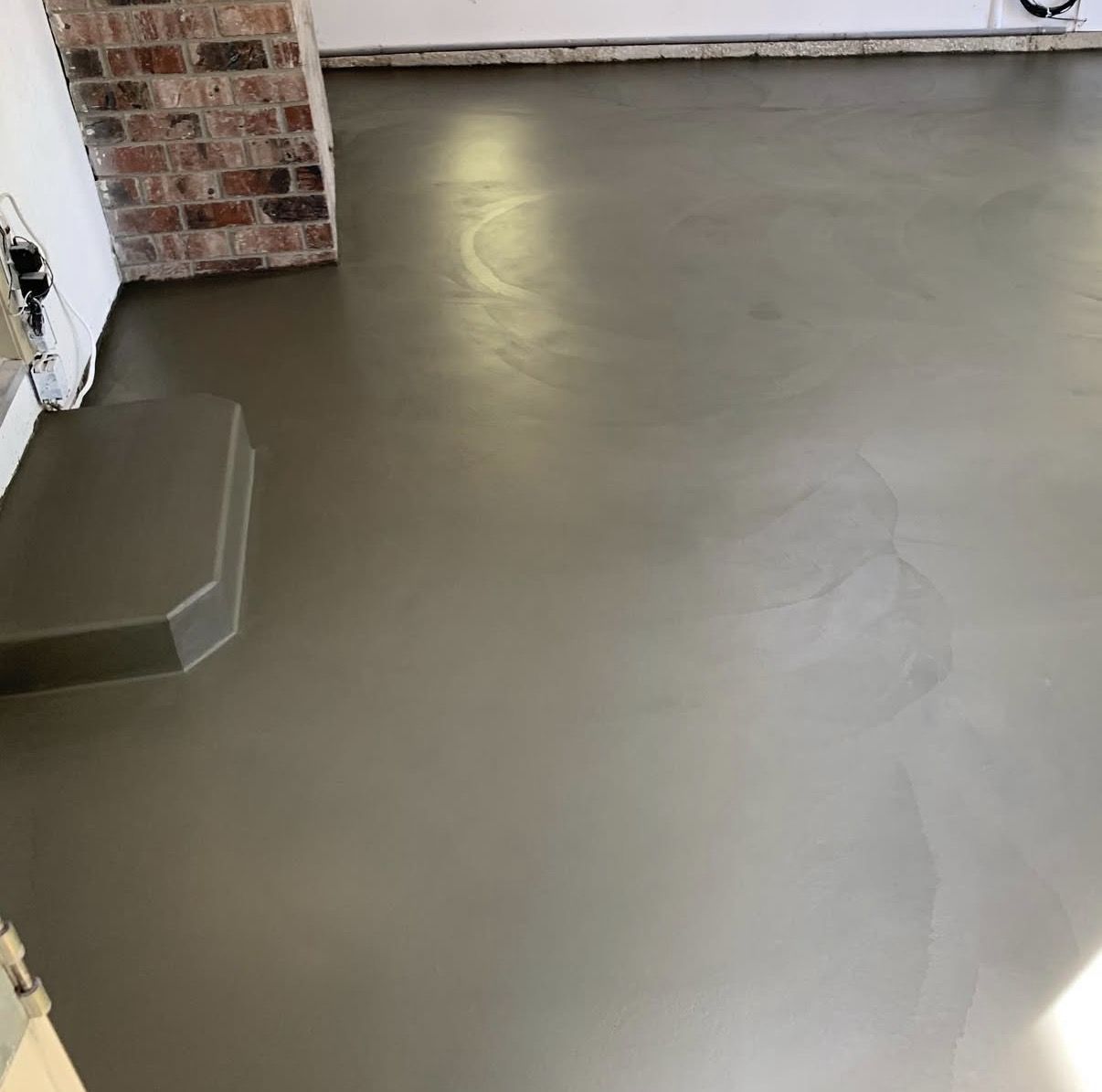
Leveling does not always mean making a surface perfectly horizontal. Exterior concrete generally needs an intentional slope that directs water away from buildings. The target should account for accessible routes, adjoining panels, and drainage outlets. Raising one low edge without checking the rest of the surface can create ponding or a troublesome transition elsewhere.
Different slab conditions call for different correction methods. We can discuss whether a lifting approach is suitable or whether removal, base rebuilding, and replacement would better address the problem. The method, materials, and limitations should be established after assessment; not every slab can be raised safely or restored to its original position.
Separate slab settlement from structural movement
An uneven patio or sidewalk is not the same issue as a settling building foundation. Cracks extending through foundation walls, sticking openings accompanied by movement, or other structural symptoms may require a structural engineer. Leveling a nearby slab should not be presented as a fix for building settlement. After correction, keeping runoff away from slab edges remains important for maintaining support.
Benefits
- Addresses elevation differences rather than covering them.
- Helps identify drainage conditions contributing to settlement.
- May preserve suitable concrete instead of replacing it.
- Sets realistic expectations around fixed adjoining elevations.
Common applications
- Sunken sidewalk panels beside entrance walks.
- Patio corners that collect rainwater.
- Uneven transitions between adjacent concrete slabs.
- Settled nonstructural slabs near garage approaches.
Concrete Leveling in Methuen and nearby communities
Methuen and nearby Dracut experience freezing winters followed by spring thaw, which can reveal changes in concrete elevations and supporting soil. A panel that rises seasonally needs a different assessment from one that has steadily settled. Across the Merrimack Valley, runoff from snow storage areas is another useful clue when investigating uneven exterior concrete.
Why contact Batista Concrete?
We're a local concrete contractor based at 477 Lowell St, Methuen, MA. Tell us about your project and we'll look at the site, talk through your options in plain language and put together a clear estimate — whether it's a small repair or a larger installation.