Understand the damage before choosing a repair
Cracking, scaling, and spalling are different conditions. A stable shrinkage crack may need a different treatment than a crack caused by continuing settlement. Surface flaking can reflect freeze-thaw exposure, salt damage, or weaknesses in the original finish. We can look at the location, depth, surrounding drainage, and signs of movement before discussing a repair approach.
Loose concrete must be removed back to a sound surface so the repair has something dependable to bond to. Simply covering a crumbling edge or filling over dirt usually leaves the original weakness in place. Where reinforcing steel is exposed, its condition and the extent of deterioration also matter when deciding the repair scope.
Match the repair to the condition and use
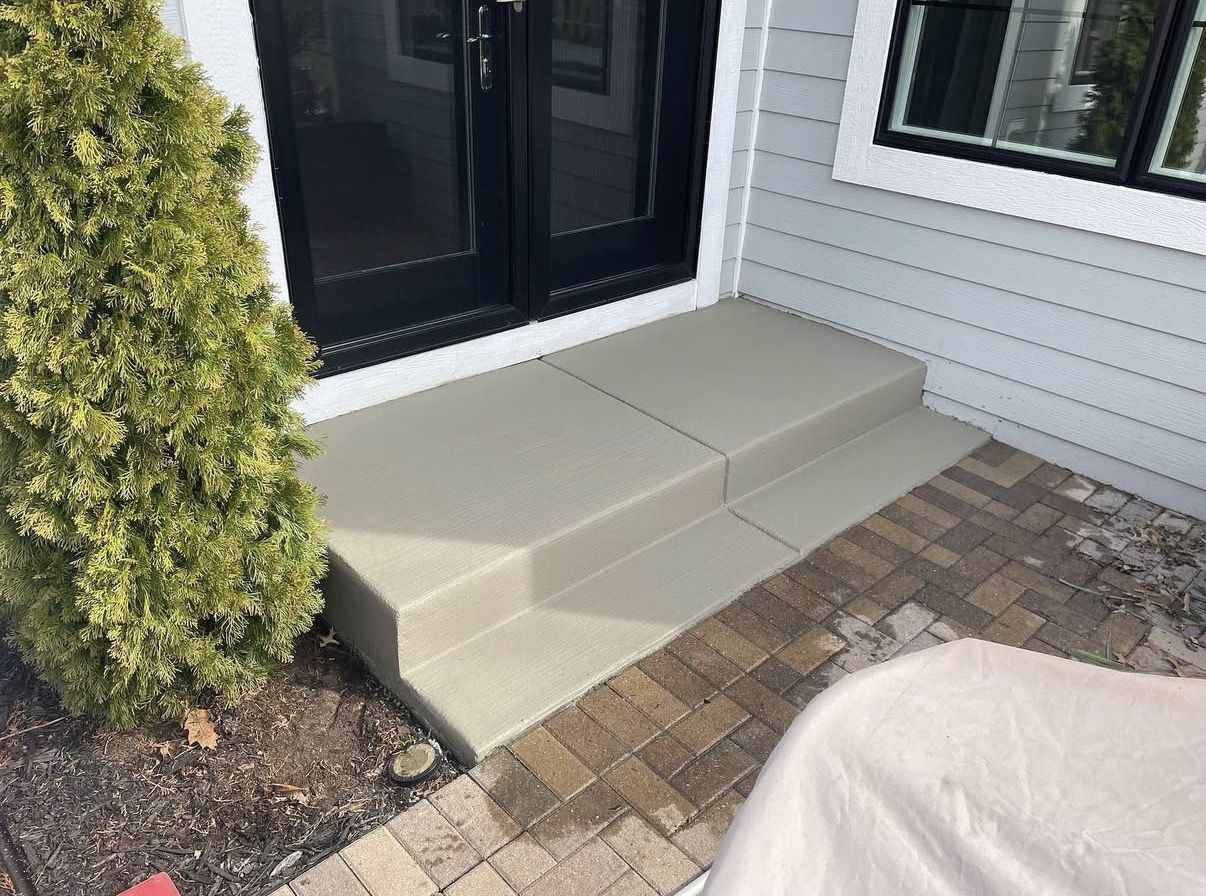
Depending on the assessment, options may include repairing a damaged edge, rebuilding a localized section, treating a suitable crack, or replacing an isolated panel. Materials and preparation should suit the repair depth, outdoor exposure, and expected traffic. A thin cosmetic patch is not a substitute for restoring a section that has lost support or substantial thickness.
Existing concrete and repair materials may differ in color and texture, even when the work is carefully finished. We can discuss those appearance limitations before work begins. If the surface has widespread deterioration, recurring movement, or a structural concern, replacement or further evaluation may be more sensible than repeated patching.
Plan for curing and continued observation
A repair needs appropriate curing and protection before regular use resumes. Access restrictions depend on the chosen material, weather, and loading, rather than a universal timetable. Afterward, watch for renewed cracking, standing water, or movement around the repair. Those changes can indicate that drainage or support conditions still need attention.
Benefits
- Targets isolated damage without assuming full replacement is necessary.
- Addresses loose edges that can continue to break apart.
- Clarifies when a defect needs more than a cosmetic patch.
- Helps plan practical access and maintenance around the repair.
Common applications
- Chipped concrete step corners and landing edges.
- Localized spalling on otherwise sound slabs.
- Stable cracks requiring an appropriate treatment.
- Small damaged areas beside joints or transitions.
Concrete Repairs in Methuen and nearby communities
Methuen concrete faces repeated New England freeze-thaw cycles and exposure to de-icing salt carried from roads onto steps and slabs. Similar conditions affect properties in Lawrence and North Andover. Keeping meltwater from collecting beside a repair is important; a patch alone cannot correct poor drainage. Contact Batista Concrete at (978) 609-6729 to discuss the damaged area.
Why contact Batista Concrete?
We're a local concrete contractor based at 477 Lowell St, Methuen, MA. Tell us about your project and we'll look at the site, talk through your options in plain language and put together a clear estimate — whether it's a small repair or a larger installation.